
Haas Reveals 2026 Formula 1 Car Design as It Targets Continued Development
Haas has unveiled its 2026 Formula 1 challenger, revealing a revised car design that reflects both the team’s evolving technical direction and its long-term development strategy. Presented at the team’s facility in North Carolina, the all-new machine signals Haas’s intent to build on the momentum of recent seasons and make steady gains up the grid as the Formula 1 landscape prepares for a highly competitive 2026 campaign.
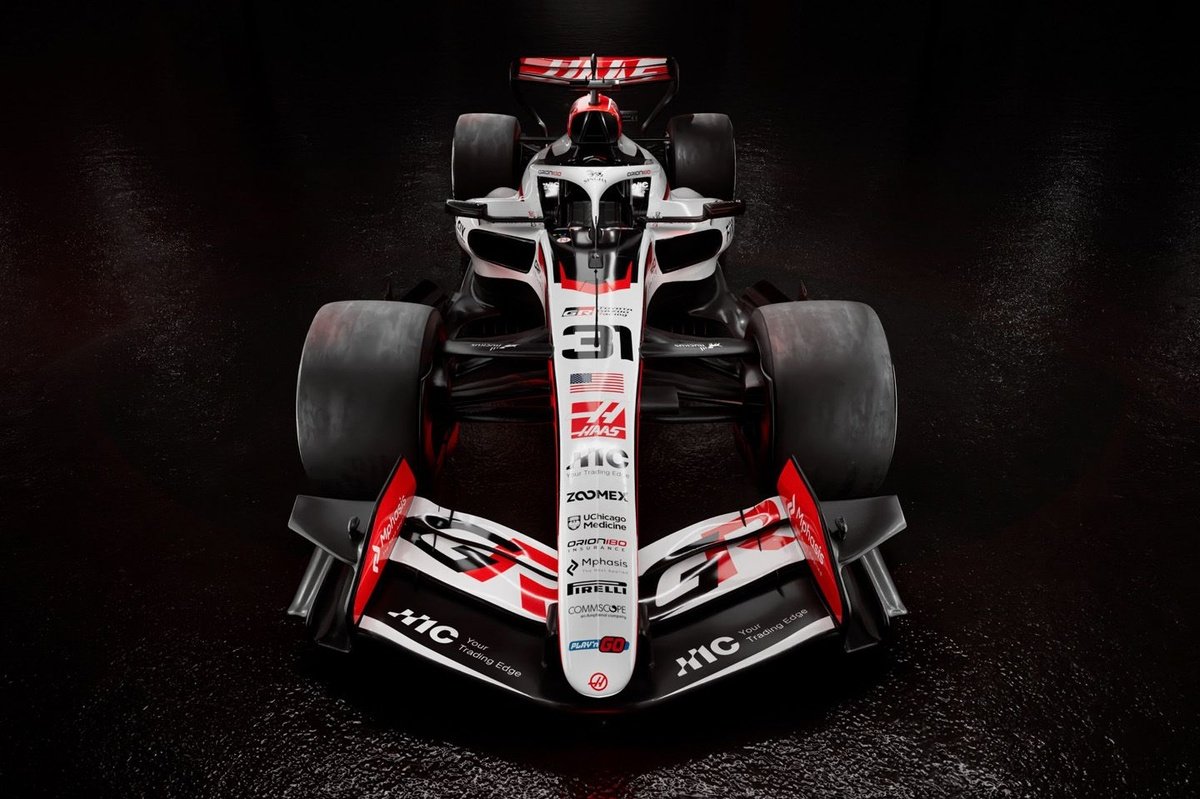
Credit: Autosport.com
Key to Haas’s approach is continuity with the core design philosophy that underpinned its 2025 car, but with focused improvements aimed at aerodynamic efficiency, chassis balance and performance consistency over race distances. Engineers have applied lessons from last season’s development cycle, particularly in how the car manages airflow over critical surfaces and uses cooling architecture to optimise thermal performance. These adjustments are designed to deliver gains across a diverse range of circuits, from high-speed layouts to tight, twisty streets.
Haas’s technical leadership emphasised that the team’s 2026 package is built on targeted evolution rather than wholesale change, reflecting confidence in the foundations already established. Senior engineers explained that while the rules remain largely stable for 2026, interpreting and refining the regulations to suit Haas’s performance goals is a primary focus. The aim is to extract incremental improvements that collectively add up to measurable gains on race day.
The livery revealed alongside the car retains Haas’s distinctive colour scheme, with subtle graphical updates intended to enhance on-track presence without overshadowing the underlying engineering story. Team principals noted that visual identity remains important for fan recognition and sponsor continuity, even as performance development takes centre stage.
Driver input has been integral to the car’s evolution. The team’s 2026 driver line up, unchanged from the previous year, has been actively involved in early simulations and setup work, providing feedback that engineers have used to fine tune mechanical grip and aerodynamic behaviour. This collaborative process is expected to continue once the team begins on-track testing in the months ahead.
Haas also highlighted its commitment to data driven development, with updated simulation tools and wind tunnel correlations aimed at reducing the gap between design expectations and real-world performance. By tightening the feedback loop between simulation, physical testing and race execution, the team hopes to accelerate its learning curve during the 2026 season.
The unveiling was met with positive reaction from within the paddock, with several technical directors praising Haas’s disciplined approach to development and its clear emphasis on performance progression. While the team acknowledges that breaking into the upper midfield remains a significant challenge, the 2026 car design lays a foundation for continued growth and competitive evolution.
As winter testing approaches, all eyes will be on how Haas’s design performs on track and whether the incremental changes translate into a stronger showing once the Formula 1 season gets underway.